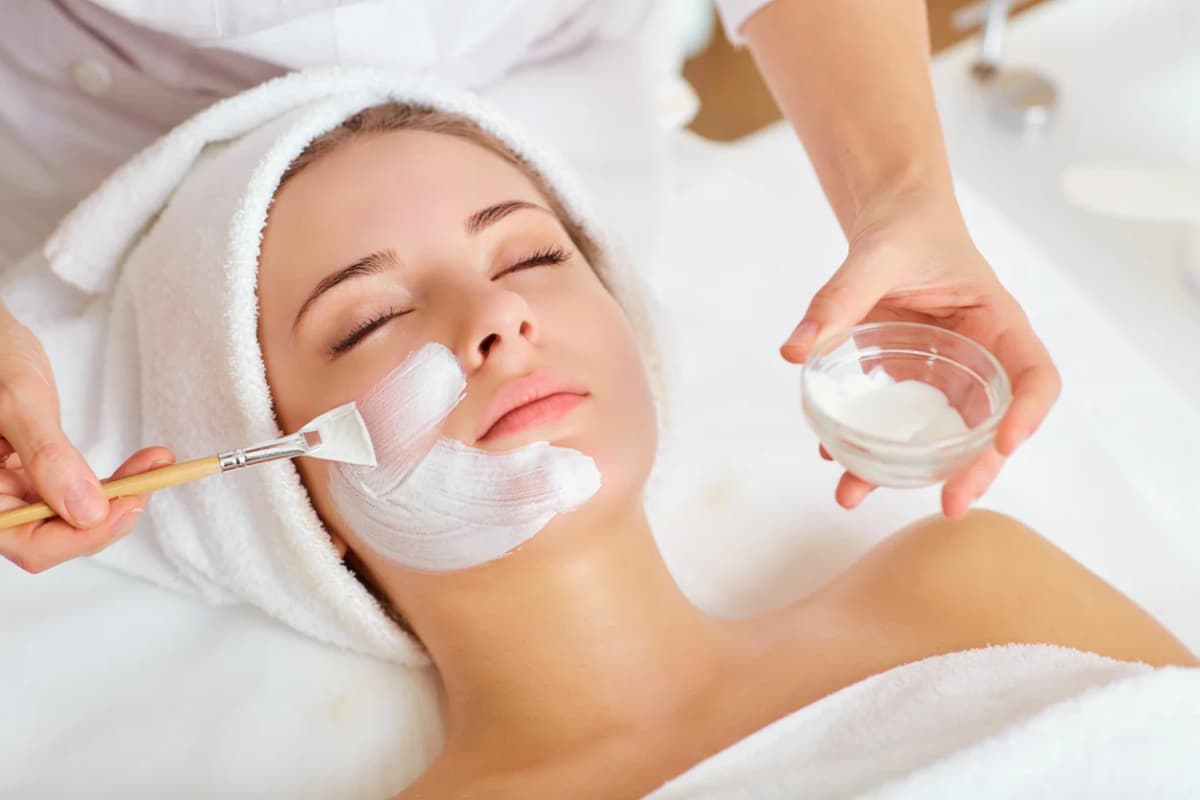
Facials 101: What a Facial Really Does and How to Choose the Right One
A clear, science-grounded guide to what facials do for your skin, the main types, how often to get them, and how to pick the right one.
Everything to know before booking a keratin treatment in India, benefits, costs, longevity, aftercare, safety and FAQs.
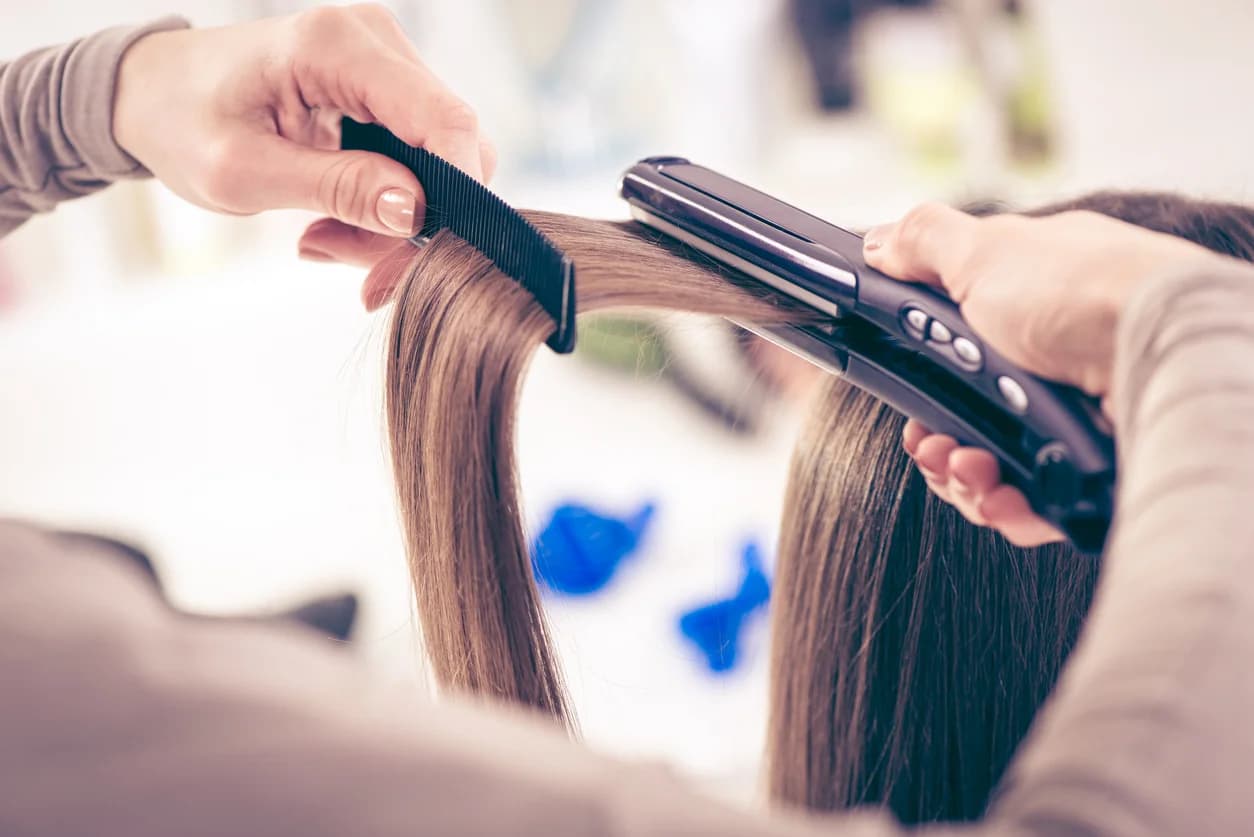
If you're weighing up a keratin treatment, you probably have a short list of very practical questions: what does it cost, how long does it last, will it damage my hair, and how is it different from smoothening or rebonding? This guide answers all of them in one place, grounded in scientific and regulatory sources rather than salon hype.
A keratin treatment is a semi-permanent smoothing service. A keratin-rich solution is applied to clean hair and sealed in with a flat iron, forming a thin smoothing layer that coats each strand. The result is less frizz, more shine and easier styling, while your hair keeps its natural movement.1 It is not the same as permanent chemical straightening, which physically restructures the hair (more on that comparison below).
Frizz reduction and humidity resistance, the smoothing film repels moisture.1
Shine and softness from a smoother strand surface.2
Reduced styling time and, over time, less cumulative heat damage.2
Better manageability, fewer tangles and flyaways.2
Gentler than chemical straightening in a single application, since it doesn't break disulfide bonds.1
One honest caveat: a keratin treatment smooths and seals hair; it does not biologically 'repair' it. Set your expectations around months of easier, smoother hair rather than permanent reconstruction.
Pricing depends mainly on hair length and density, the product/brand used, and the salon's expertise. As a general guide for the Indian market, keratin treatments commonly range from around ₹4,000 to ₹15,000, with budget options starting lower and premium or designer-brand treatments going higher.9 Longer, thicker hair uses more product and time, so it sits at the upper end.
What you're really paying for
A safe, good-quality keratin treatment isn't just product cost. It reflects the formula's quality and safety, the stylist's training, proper ventilation and technique, and time. The cheapest option is rarely the place to economise on a heat-and-chemistry service. Ask what product is used and why before comparing prices.4
For an exact quote on your hair, the best step is a quick consultation, length and condition make a real difference to both price and the right product choice.
Most keratin treatments last three to six months.2,3 Crucially, they fade gradually as the smoothing layer wears away, there's no harsh demarcation line between treated and new growth, unlike chemical straightening.3 How long your result lasts depends heavily on aftercare, especially your shampoo and how often you wash.
This is the comparison clients most often want. Here's how the main options differ:
Service | What it does to hair | Result | Lasts |
|---|---|---|---|
Keratin treatment | Surface smoothing film; no bond-breaking | De-frizzed, shiny, keeps movement | 3–6 months2,3 |
Smoothening | Milder smoothing, flattens texture a little more | Smoother, softer, some natural texture | 2–6 months |
Rebonding / Japanese straightening | Breaks then re-forms disulfide bonds | Pin-straight, sleek | Permanent; touch up regrowth |
Chemical relaxer | Destroys disulfide bonds (lanthionine) | Straightens very curly/coily hair | Permanent; most aggressive |
The trade-off is consistent: the more permanent and dramatic the straightening, the more it alters the hair's internal structure and the greater the potential for damage.1 Keratin sits at the gentle, temporary end of that spectrum.
The main safety conversation around keratin treatments concerns formaldehyde. Some formulas contain formaldehyde or ingredients (like methylene glycol) that release it when heated, which can irritate eyes, nose and throat; formaldehyde is classed as a human carcinogen, and the FDA advises reading labels and asking what's in the product.4 Awkwardly, 'formaldehyde-free' labels are not always accurate, one peer-reviewed study found formaldehyde in five products that claimed to be free of it.5
Two further points keep the picture honest:
'Formaldehyde-free' isn't automatically 'risk-free.' The common glyoxylic-acid alternative has been linked, in a 2024 NEJM report, to rare cases of acute kidney injury.7
The cancer headlines refer to frequent chemical-straightener use. The NIH Sister Study found an association between frequent hair-straightener use and uterine cancer but it's an observational association, didn't pinpoint a specific chemical, and isn't equivalent to an occasional keratin smoothing.6
Regulation is still evolving: the FDA has proposed banning formaldehyde in these products but, as of early 2026, has not finalised the rule.8 The practical message isn't fear, it's to choose a clean formula and a careful salon, which removes most of the risk.
Pregnant or breastfeeding individuals (precautionary).4,11
Anyone with a broken or irritated scalp or a known allergy to smoothing ingredients.4
People with severe or unexplained hair loss, see a dermatologist first.
Wait before your first wash per your stylist's instruction (traditionally ~72 hours; some modern formulas allow sooner).2
Use a sulfate-free and salt-free shampoo, the single most important step for longevity.10
Wash less often (2–3 times a week) with a light conditioner on mid-lengths and ends.2
Avoid chlorine and salt water, which accelerate fading.2
Consultation, assessment of your hair type, condition, colour history and scalp, and a quote for your length.
Clarifying wash to remove buildup and prepare the cuticle.1
Application of the keratin solution, section by section, with absorption time.
Blow-dry, then flat-iron sealing in small sections, the heat step that sets the result.1
Finishing and an aftercare brief tailored to the product used.
Plan for a couple of hours or more depending on length and thickness. Bring something to read, most of the appointment is comfortable and low-effort for you.
Keratin treatments shine on frizzy, wavy, coarse or hard-to-manage hair, and on colour-treated hair that's become a little rough and porous, where the smoothing film noticeably improves feel and can support colour retention.1 If your hair is fine and already quite straight, you'll get shine and frizz control but a more subtle overall change. If your hair is very tightly curled and you want it permanently straight, a keratin treatment isn't the right tool, that's a straightening or rebonding conversation.
It smooths and dramatically reduces frizz rather than permanently straightening. Depending on your hair and the formula, curls may relax from 'smoother and defined' to 'nearly straight,' but it isn't a permanent straightening service.1
A single keratin treatment is far gentler than relaxers or rebonding because it doesn't break disulfide bonds. That said, glyoxylic-acid versions still cause some measurable protein loss, and formaldehyde versions carry exposure concerns, so formula and technique matter.1
Generally yes, and it can even help colour-treated hair feel smoother. A common best practice is to space colouring and keratin by about two weeks.2
Commonly every three to six months, in line with how it fades. Avoid over-treating, which compounds wear on the hair.3
Traditionally wait about 72 hours; many modern formulas allow same-day washing. Follow the specific guidance your stylist gives for the product used.2
Many clinicians advise avoiding hair-smoothing treatments during pregnancy and breastfeeding as a precaution, largely because of formaldehyde-exposure concerns and limited safety data. If you're pregnant or trying to conceive, it's best to wait and speak to your doctor.4,11
Yes, it's a unisex service. Men with thick, frizzy or unmanageable hair often find a keratin treatment makes styling far quicker and the hair easier to control.
That's one of its main strengths. The smoothing film is water-repellent, so it resists the moisture that normally swells hair into frizz on humid days.1
Ready to book?
At Diana & Dapper in Hyderabad, we'll assess your hair and scalp, explain the formula we use, give you an exact quote for your length, and only recommend a keratin treatment if it genuinely suits you. Book a consultation and let's find the right option for your hair.
1. Velasco MVR et al. Impact of acid and alkaline straightening on the hair fibre. International Journal of Trichology, 2022. https://pmc.ncbi.nlm.nih.gov/articles/PMC10075350/
2. Healthline. Keratin Hair Treatment: Pros and Cons. https://www.healthline.com/health/keratin-treatment-pros-and-cons
3. Davines / Societe Salon. How long does a keratin treatment last. https://societesalons.com/blog/how-long-do-keratin-treatments-last/
4. U.S. FDA. Hair Smoothing Products That Release Formaldehyde When Heated (updated 2024). https://www.fda.gov/cosmetics/cosmetic-products/hair-smoothing-products-release-formaldehyde-when-heated
5. Pierce JS et al. Elevated formaldehyde in 'Brazilian keratin type' straightening products. JAAD, 2014. https://www.jaad.org/article/S0190-9622(13)01135-3/abstract
6. Chang C-J et al. Use of straighteners and incident uterine cancer (NIH Sister Study). JNCI, 2022. https://academic.oup.com/jnci/article/114/12/1636/6759686
7. Kidney injury and hair-straightening products containing glyoxylic acid. NEJM, 2024. https://www.nejm.org/doi/full/10.1056/NEJMc2400528
8. CNN. FDA misses deadline on proposed formaldehyde ban, Jan 2026. https://www.cnn.com/2026/01/05/health/hair-straightening-formaldehyde-fda-deadline
9. Oliva Clinic. Keratin hair treatment: process, cost and care (India). https://www.olivaclinic.com/blog/keratin-hair-treatment/
10. Inova Professional. Why sulfate-free shampoo matters after keratin. https://inovaprofessional.com/blogs/blog/why-using-sulfate-free-shampoo-is-crucial-after-your-keratin-treatment
11. TODAY Health. Keratin treatment and pregnancy: a doctor explains, 2025. https://www.today.com/health/womens-health/keratin-hair-treatment-pregnancy-risks-doctor-explains-rcna228862
A note on this article
This article is for general education and is based on the cited scientific and regulatory sources. It is not medical advice. Results vary by individual; for any medical scalp or hair condition, please consult a qualified dermatologist. At Diana & Dapper we are happy to discuss your hair and scalp history before recommending any service, book a consultation to learn what is right for you.
Ready to book?
Sainikpuri and Malkajgiri. Walk-ins always welcome — no appointment needed.
Browse all articles or explore by topic below.
A clear, science-grounded guide to what facials do for your skin, the main types, how often to get them, and how to pick the right one.
What a keratin treatment really does, who it suits, and how to decide, explained simply, backed by science.
A friendly, honest guide to hair smoothening, what it is, how it differs from keratin and rebonding, and how we keep it safe.
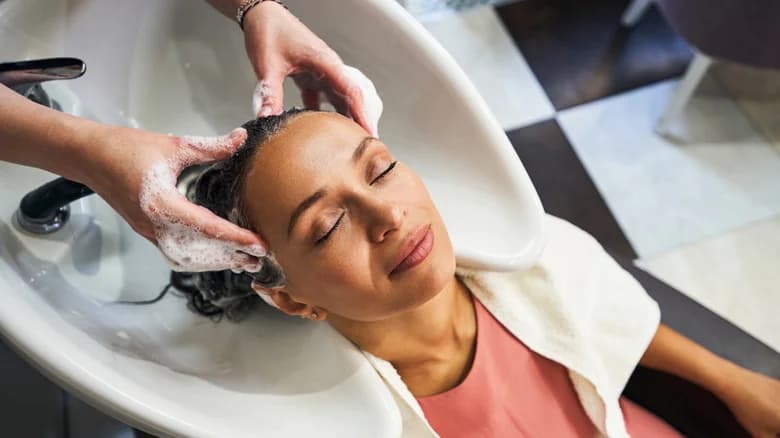
Your scalp is the soil your hair grows from. Here's what a salon scalp treatment can and can't, do, explained simply.
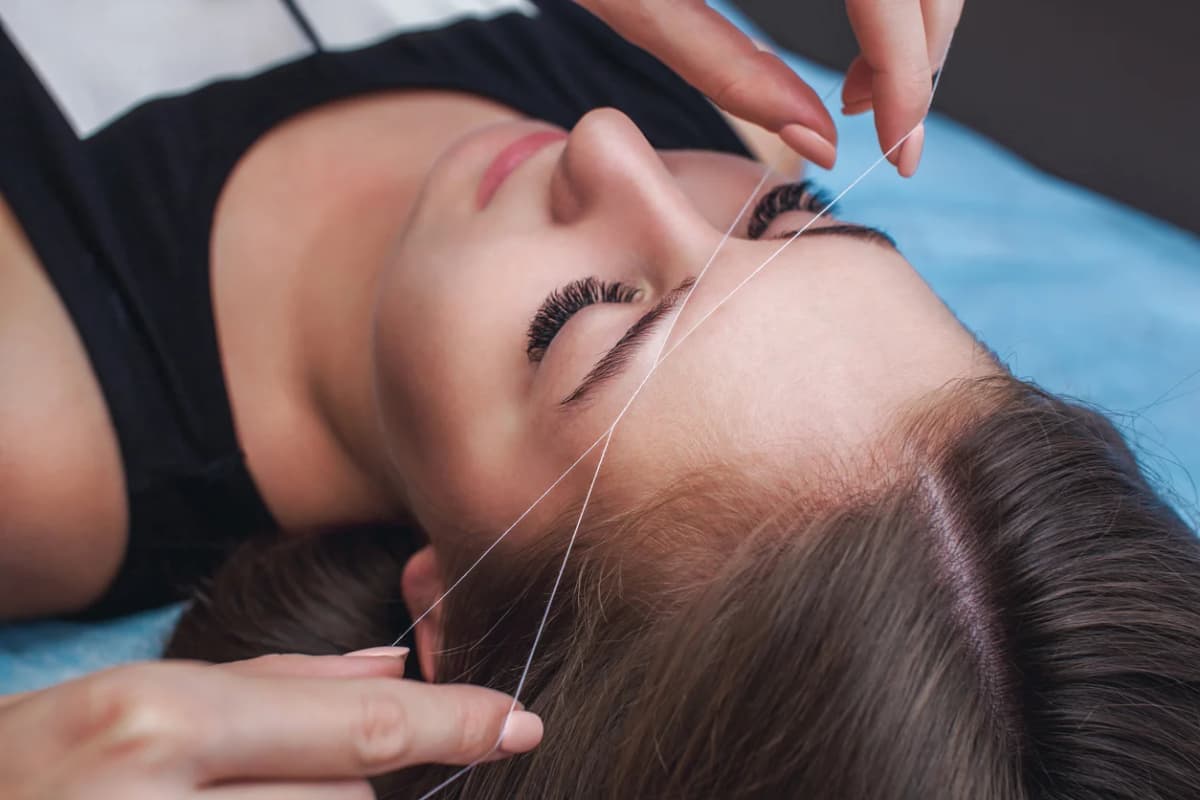
A friendly guide to the quick add-on treatments worth booking alongside your facial or hair appointment and how to get the best results.
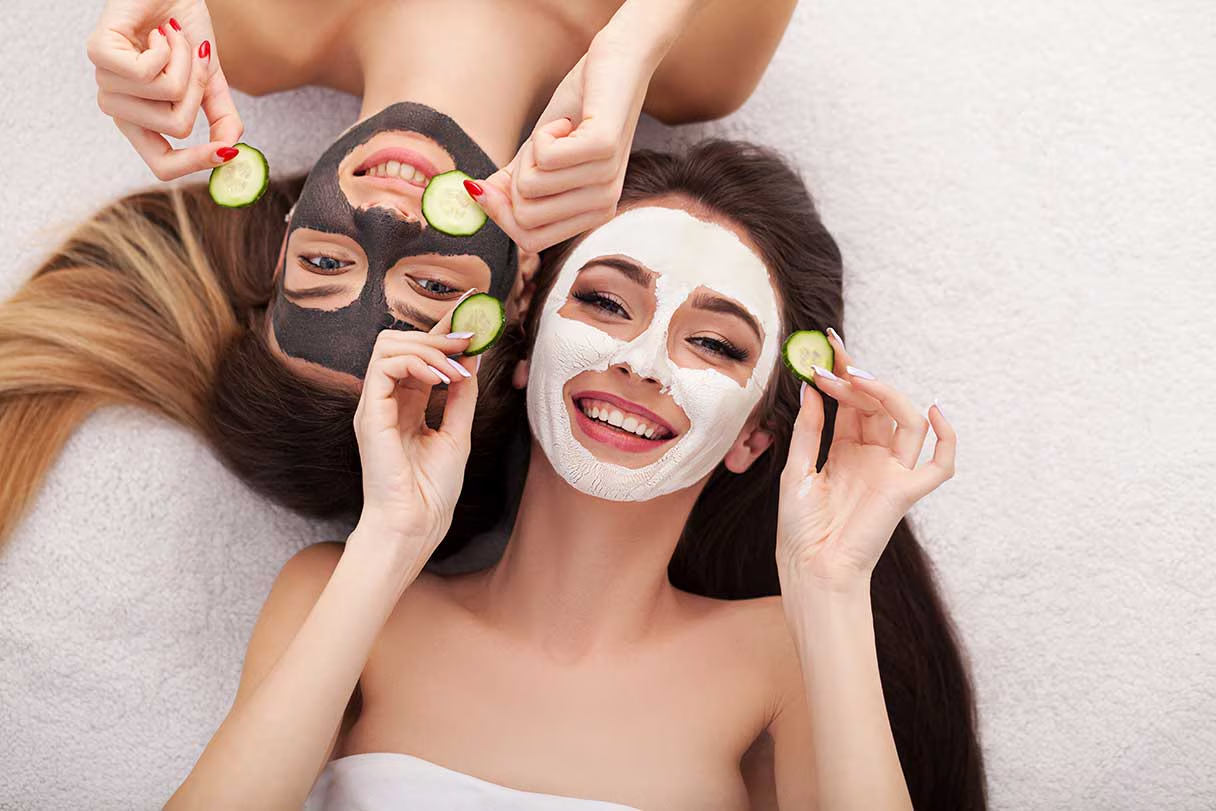
Your guide to professional facials and why your face deserves the very best care