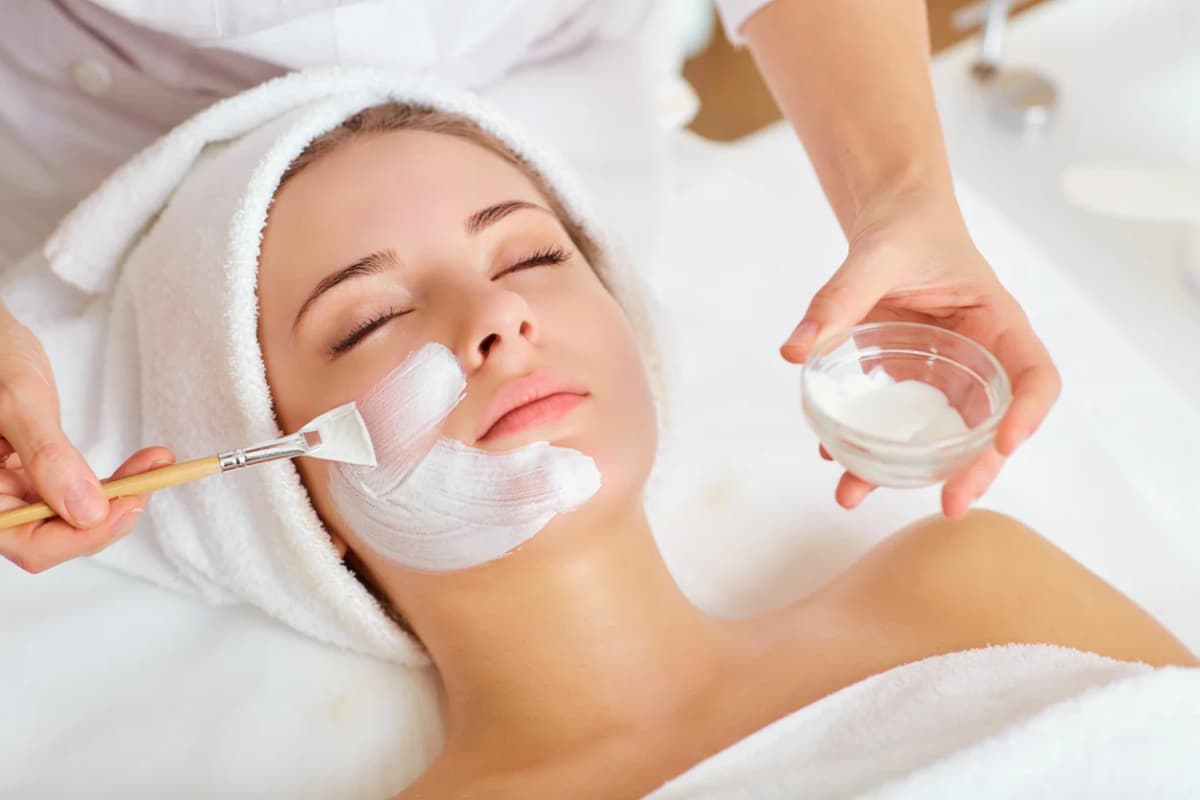
Facials 101: What a Facial Really Does and How to Choose the Right One
A clear, science-grounded guide to what facials do for your skin, the main types, how often to get them, and how to pick the right one.
Why hair is curly or straight, the chemistry behind every straightening method, and an honest look at the safety evidence.
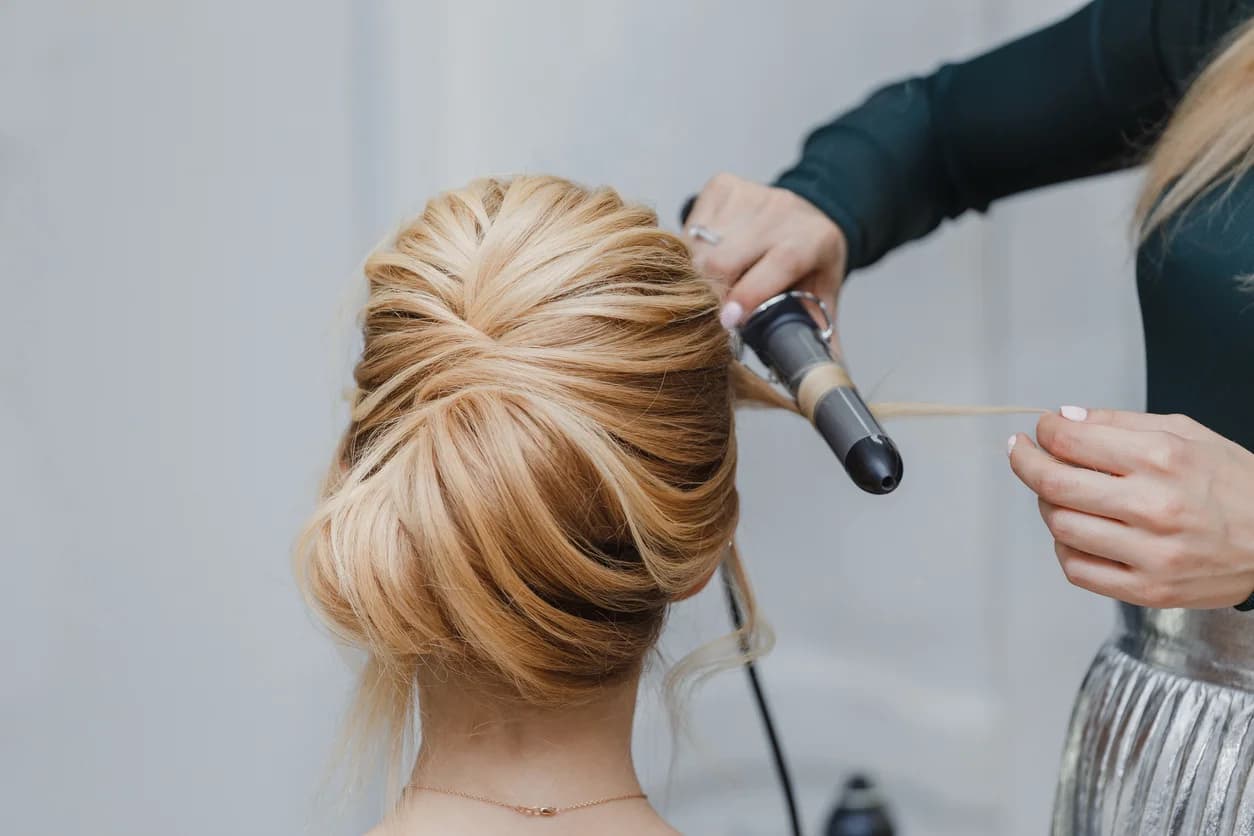
Why is some hair poker-straight and some a tight spiral? And when a salon "smooths" or "straightens" that hair, what is physically changing inside each strand? These are surprisingly deep questions, and understanding the answers makes you a far better-informed client. This article walks through the real science, from the follicle to the chemistry of every straightening method and then looks honestly at the safety evidence.
It's tempting to think curl is decided by the hair you can see, but it begins below the surface, at the follicle. The shape of the follicle and the angle at which it sits in the scalp set the baseline: a round, symmetrical follicle sitting vertically tends to grow straight hair, while a flattened, oval or curved follicle forces the emerging strand to bend. The flatter the follicle's cross-section, the tighter the curl.1,2
Inside a curved fibre there's a second mechanism. The cortex (the bulk of the hair) contains two populations of cells, orthocortex and paracortex. That distribute unevenly in curly hair, with one type concentrating on the inside of the curl and the other on the outside. Because these cell types swell and contract differently, that imbalance bends and spirals the fibre.1
A nuance most articles get wrong
You'll often read that "disulfide bonds cause curl." A peer-reviewed review argues this is an oversimplification: disulfide bonds form during keratinisation, after the cortical cells are already mature, so they mainly lock in and stabilise a shape that follicle geometry and cortical-cell asymmetry have already created.1 Follicle shape makes the curl; disulfide bonds hold it in place.
Every straightening method on earth works by manipulating one of two kinds of bonds in keratin:
Hydrogen bonds are weak and temporary. Water and heat break them; they re-form as the hair cools and dries. This is all that happens when you flat-iron or blow-dry, which is exactly why the effect vanishes with the next wash or a humid afternoon.3
Disulfide bonds are strong covalent links. They're the permanent bonds, and any lasting change to hair shape requires breaking and re-forming (or destroying) them.3,4
Heat and water break hydrogen bonds; the hair is reshaped while warm, and new hydrogen bonds set in the straight position as it cools. Because hydrogen bonds re-form readily on contact with moisture, the result reverses with washing or humidity. No permanent change occurs.3
A smoothing solution is applied and sealed with a hot flat iron. Traditional formulas used methylene glycol (a formaldehyde donor) or glyoxylic acid; the iron's heat drives the reaction and lays down a smoothing coating aligned straight. The effect is semi-permanent, typically weeks to a few months and reduces frizz while keeping much of the hair's natural body.6 A key caveat: during the heat step, methylene glycol can release formaldehyde gas, which is central to the safety section below.6
Used to straighten very curly or coily hair, relaxers work at high pH. "Lye" relaxers use sodium hydroxide; "no-lye" versions use guanidine hydroxide or thioglycolate chemistry. Through a process called lanthionization, hydroxide converts a disulfide bond into a lanthionine bond by removing a sulfur atom. This is a permanent, one-way change, the bond is destroyed rather than re-formed, which makes relaxers the most chemically aggressive category.4
This is a two-step reduction-oxidation system. First, an ammonium-thioglycolate solution penetrates the hair and breaks disulfide bonds, softening it. The hair is then flat-ironed pin-straight, and a neutraliser (usually hydrogen peroxide) re-forms the disulfide bonds in the new straight configuration.3,5 Unlike relaxers, which destroy bonds, rebonding actually restructures them, giving very durable, sleek results, but with significant processing that can be damaging if done poorly.5
The mental model
Flat iron → breaks hydrogen bonds (reversible).3
Smoothening → coats and seals, loosens bonds with heat (semi-permanent).6
Rebonding → breaks then re-forms disulfide bonds (permanent restructure).5
Relaxer → destroys disulfide bonds into lanthionine (permanent, one-way).4
This is the part where careful reading matters most, because the topic is heavily sensationalised in both directions.
OSHA and the FDA confirm that many smoothing products contain formaldehyde, formalin or methylene glycol, which release formaldehyde gas when heated during flat-ironing.6,7 Deceptive labelling is documented, and measured salon air levels have, in at least one case, reached 10 ppm during blow-drying, well above short-term occupational limits.7 Formaldehyde is classified as a human carcinogen (linked, in occupational settings, to nasopharyngeal and sinonasal cancers and leukaemia), and above ~0.1 ppm in air it can cause eye, throat and respiratory irritation.6,7
The headline research is the NIH Sister Study (Chang et al., 2022): across 33,497 women, those reporting frequent straightener use (more than four times a year) had over twice the rate of uterine cancer, with estimated risk by age 70 rising from 1.64% in never-users to 4.05% in frequent users.8,9 The study itself stresses important context: uterine cancer is relatively rare, this is an association not proof of causation, and the specific products and ingredients were not recorded.8
The picture is also genuinely mixed. The Black Women's Health Study (2023) did not find a statistically significant association for heavy use overall, though it did find significant associations specifically among postmenopausal women. A nuance that argues against treating the link as simple or settled.10 The proposed mechanism, scalp absorption of hormone-disrupting chemicals, possibly worsened by scalp burns, remains a hypothesis.8
The honest framing
The cancer evidence is observational, shows an association rather than proven cause, is strongest for frequent, long-term chemical-relaxer use, and is not equivalent to an occasional keratin smoothing or temporary flat-iron. Taking it seriously and refusing to overstate it are both part of being honest.8,9,10
Glyoxylic acid increasingly replaces formaldehyde, but it is metabolised to oxalate, which can form calcium-oxalate crystals in the kidneys. Multiple case reports document acute kidney injury after glyoxylic-acid straightening, and researchers have recommended caution.11 The lesson is simple: "formaldehyde-free" is not automatically "safe."
Relaxers are chemically corrosive, the pH of both lye and no-lye relaxers is at levels corrosive to skin, and scalp burns are documented (and may even increase chemical absorption).13 Over-processing or repeating treatments causes dryness, brittleness and breakage, especially on already-damaged or coloured hair.4
Beyond the safety headlines, there's the everyday question of fibre health. Controlled trichology testing puts numbers on it: virgin hair lost about 1.12 µg/g of protein during processing, alkaline-relaxed hair about 2.5 µg/g, and glyoxylic-acid-treated hair about 3.56 µg/g.3 The pattern is consistent, the more a method alters the internal bond structure, the more protein is stripped and the more the fibre's strength is affected. This is the mechanistic reason rebonding and relaxers demand healthy starting hair and skilled application, and why repeating any chemical service too often is the fast route to breakage.
It also explains why aftercare is chemistry, not just marketing. Sulfate-free, salt-free shampoos avoid stripping the smoothing layer and the hair's remaining lipids, while gentler washing and heat protection reduce further wear on an already-processed fibre.
Translate the science into decisions and three principles emerge. First, match the method to the goal, don't reach for permanent bond-breaking chemistry if a temporary smoothing film would satisfy you. Second, respect your hair's current condition, bleached, over-coloured or previously straightened hair has less structural reserve, so adding aggressive chemistry compounds the risk. Third, technique is not a detail, ventilation, controlled processing time, correct neutralisation and sensible frequency are what separate a good result from damage.3,6 A salon that understands the chemistry will steer you toward the gentlest option that meets your goal, not the most expensive one.
The FDA proposed a rule to ban formaldehyde and formaldehyde-releasing chemicals in hair-smoothing products, but it has repeatedly missed its own deadlines and, as of early 2026, the rule is not yet finalised.12 So it is accurate to call this proposed, not law.
Put the science together and a clear conclusion emerges: the difference between a safe, satisfying smoothing service and a risky one comes down to which product is used and how it's applied, ventilation during the heat step, honest product disclosure, patch testing, careful candidacy screening, and correct processing time to avoid over-damage.6,7 These aren't details to gloss over; they're the whole game.
At Diana & Dapper, that's precisely the standard we work to and we're always happy to explain the chemistry of any service before you commit. If you'd like to understand exactly what a treatment would do to your hair, come in for a consultation.
1. Cloete E et al. The what, why and how of curly hair: a review. Proc. R. Soc. / PMC, 2019. https://pmc.ncbi.nlm.nih.gov/articles/PMC6894537/
2. Northwestern University HELIX. The Science of Curls, 2014. https://www.helix.northwestern.edu/2014/05/20/the-science-of-curls/
3. Healthline. Japanese hair straightening: hydrogen and disulfide bonds. https://www.healthline.com/health/beauty-skin-care/japanese-hair-straightening
4. Chemistry World. Are hair relaxers damaging to health? (lanthionization; lye vs no-lye). https://www.chemistryworld.com/features/are-hair-relaxers-damaging-to-health/4017658.article
5. Thermal Reconditioning Specialist. Japanese straightening (thioglycolate + neutraliser). https://www.thermalreconditioningspecialist.com/services/thermal-reconditioning-japanese-straightening/
6. U.S. FDA. Hair Smoothing Products That Release Formaldehyde When Heated (updated 2024). https://www.fda.gov/cosmetics/cosmetic-products/hair-smoothing-products-release-formaldehyde-when-heated
7. OSHA. Hair Salons: Facts about Formaldehyde in Hair Products. https://www.osha.gov/hair-salons
8. Chang C-J et al. Use of straighteners and incident uterine cancer (NIH Sister Study). JNCI, 2022. https://doi.org/10.1093/jnci/djac165
9. American Cancer Society. Possible link between hair straightening chemicals and uterine cancer, 2022. https://www.cancer.org/cancer/latest-news/study-finds-possible-link-between-hair-straightening-chemicals-and-uterine-cancer.html
10. Bertrand KA et al. Hair relaxer use and uterine cancer risk in the Black Women's Health Study. Environmental Research, 2023. https://www.sciencedirect.com/science/article/abs/pii/S0013935123020327
11. Acute kidney injury and hair-straightening products (glyoxylic acid). PMC, 2024. https://pmc.ncbi.nlm.nih.gov/articles/PMC11328560/
12. CNN. FDA misses deadline on proposed formaldehyde ban, Jan 2026. https://www.cnn.com/2026/01/05/health/hair-straightening-formaldehyde-fda-deadline
13. pH of lye and no-lye relaxers at levels corrosive to skin. SAMJ / SciELO, 2019. https://scielo.org.za/scielo.php?script=sci_arttext&pid=S0256-95742019001200011
A note on this article
This article is for general education and is based on the cited scientific and regulatory sources. It is not medical advice. Results vary by individual; for any medical scalp or hair condition, please consult a qualified dermatologist. At Diana & Dapper we are happy to discuss your hair and scalp history before recommending any service, book a consultation to learn what is right for you.
Ready to book?
Sainikpuri and Malkajgiri. Walk-ins always welcome — no appointment needed.
Browse all articles or explore by topic below.
A clear, science-grounded guide to what facials do for your skin, the main types, how often to get them, and how to pick the right one.
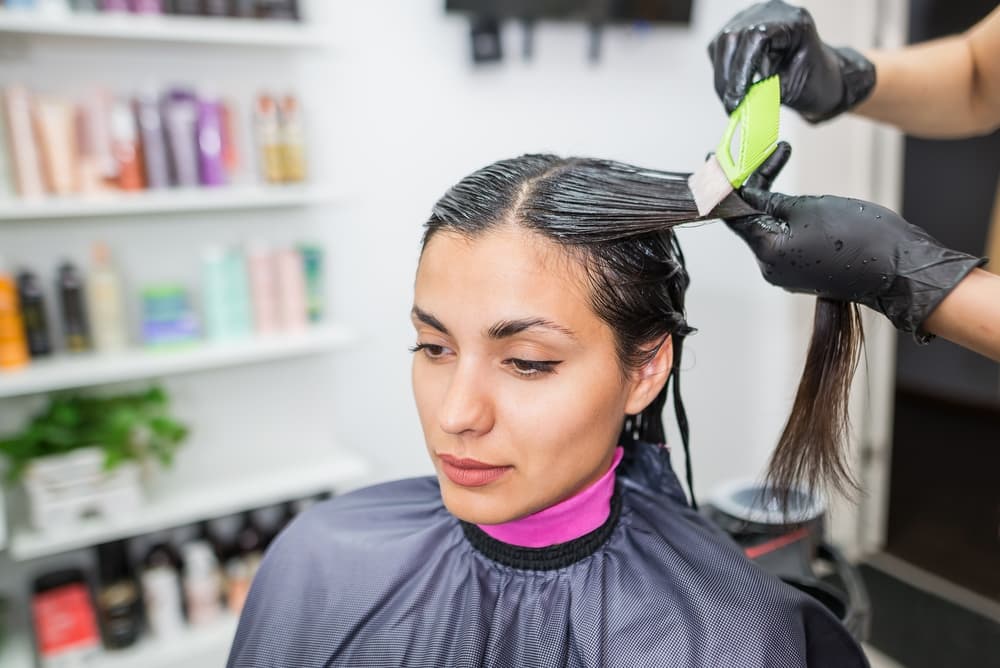
What a keratin treatment really does, who it suits, and how to decide, explained simply, backed by science.
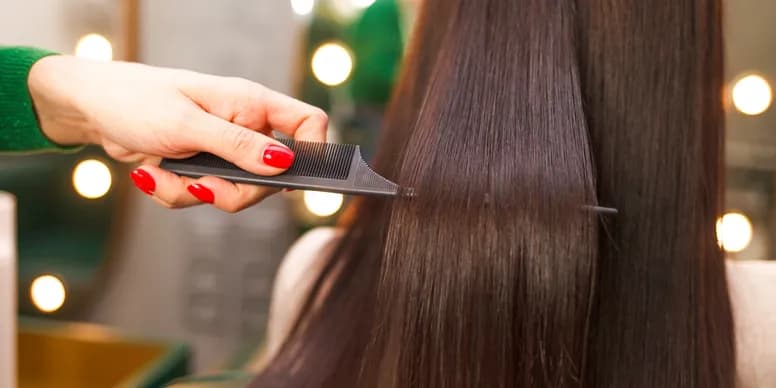
A friendly, honest guide to hair smoothening, what it is, how it differs from keratin and rebonding, and how we keep it safe.
Your scalp is the soil your hair grows from. Here's what a salon scalp treatment can and can't, do, explained simply.
A friendly guide to the quick add-on treatments worth booking alongside your facial or hair appointment and how to get the best results.
Your guide to professional facials and why your face deserves the very best care