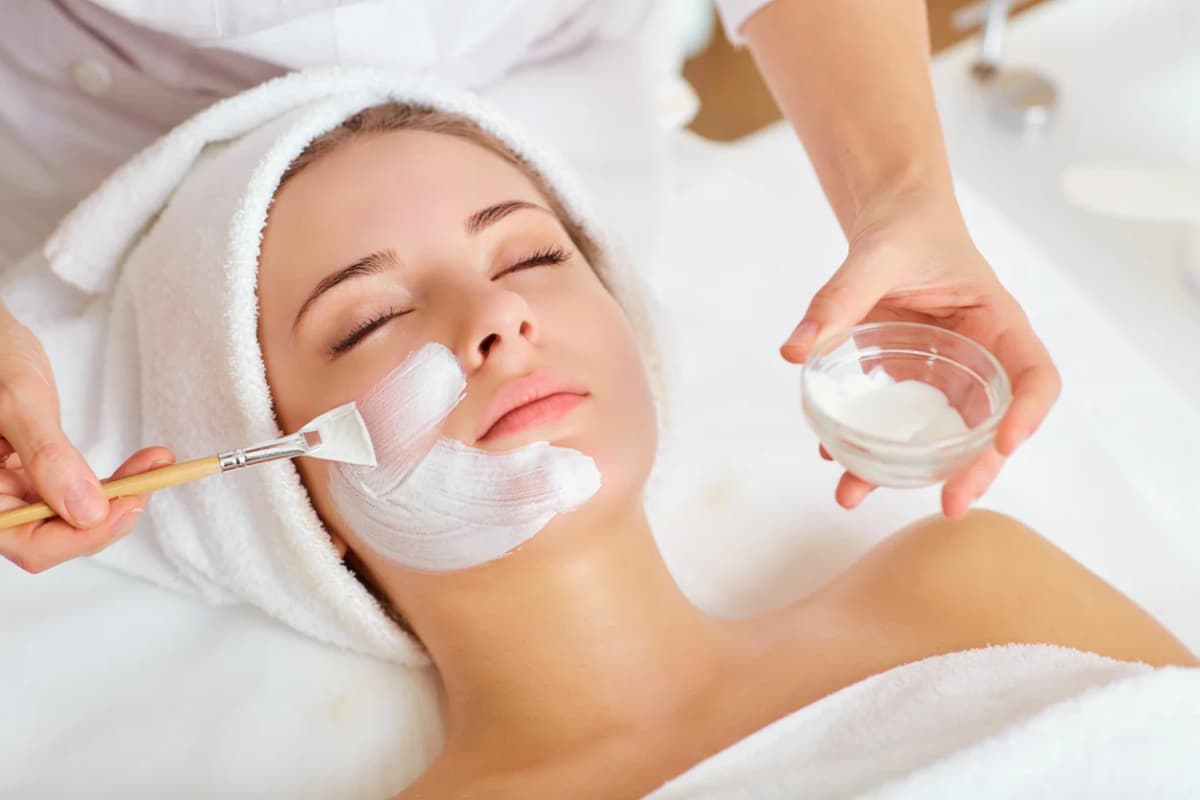
Facials 101: What a Facial Really Does and How to Choose the Right One
A clear, science-grounded guide to what facials do for your skin, the main types, how often to get them, and how to pick the right one.
A clear, evidence-based look at the chemistry of keratin smoothing and an honest explanation of the safety debate.
Keratin treatments are everywhere, but the science behind them is widely misunderstood, by clients and, frankly, by a fair number of salons. This article explains what is genuinely happening to your hair at a molecular level, what the evidence supports, and how to read the safety debate without either panic or false reassurance. If you like to understand what you're putting on your body, this one is for you.
A single hair is a remarkably engineered structure. By weight it is roughly 90% protein, keratin and it is built in three concentric zones: the cuticle (the overlapping outer scales that protect the strand), the cortex (the bulk of the fibre, which determines its strength and shape), and an inconsistent central medulla.1,3
Keratin is assembled hierarchically, from alpha-helix protein chains bundled into progressively larger filaments running along the length of the fibre, all embedded in a sulfur-rich matrix.2,3 Two kinds of bonds hold this architecture together, and the difference between them is the single most important concept in all of hair chemistry:
Disulfide bonds (sulfur-to-sulfur links between cystine units) are strong, permanent covalent bonds. They are responsible for your hair's fundamental shape and its resistance to chemicals and stress. Trichocyte keratin is unusually rich in them.1,2
Hydrogen and salt bonds are weak and temporary. Water and heat break them easily, which is exactly why a blow-dry reshapes your hair, and why humidity undoes it within hours.1
Damage matters here. Controlled trichology testing shows that chemically processed hair loses measurably more protein than virgin hair, virgin strands lost about 1.12 µg/g of protein, versus roughly 2.5 µg/g for alkaline-relaxed hair and 3.56 µg/g for hair treated with glyoxylic acid.1 In plain terms: aggressive processing thins out the protein that keeps hair strong and smooth.
A keratin smoothing treatment applies a solution of hydrolysed keratin together with an aldehyde or aldehyde-precursor to washed hair, which is then blow-dried and sealed with a flat iron at around 200 °C.1,4 The heat is not optional. It removes water and supplies the energy that allows the treatment to set. What happens next depends on the chemistry of the specific product:
Formaldehyde cross-links to keratin (binding to amino-acid residues such as lysine, arginine, histidine and tyrosine). Under the flat iron's heat, this polymerises into a thin polyacetal film that coats the cuticle, giving rigidity, shine and water-repellency. The frizz reduction comes from that hydrophobic seal resisting humidity. Importantly, the hair is sealed smooth on the surface, not internally restructured.1,4
Here the aldehyde and carboxylic groups react with keratin's amino groups, encouraging a conformational shift in the protein within the cortex and laying down a hydrophobic film on the cuticle. Critically, glyoxylic acid does not cleave disulfide bonds.1 This is the chemistry most 'formaldehyde-free' treatments rely on.
The crucial distinction
A keratin / smoothing treatment is a temporary, film-forming surface coating. It smooths and reduces frizz while leaving your hair's natural movement intact, and it washes out gradually over months.1
Chemical straightening (relaxing or rebonding) uses high-pH chemistry to actually break and re-form (or destroy) disulfide bonds. That is a permanent internal change, more dramatic, but also more damaging, reducing the hair's tensile strength.1
Two benefits are mechanistically well supported. Frizz reduction and humidity resistance follow directly from sealing the cuticle with a hydrophobic film.1 Shine follows from a smoother surface reflecting light more evenly.4 Reduced daily styling time and, indirectly, less cumulative heat exposure are logical consequences that clients reliably report.
Some marketing language deserves a sceptical eye. Claims that a keratin treatment "repairs" hair or "heals split ends" overstate things: this is temporary cosmetic bonding and coating, not biological repair. The accurate way to describe it is that it temporarily seals and smooths the fibre. Likewise, single universal numbers for longevity or 'percentage repair' should be treated cautiously, because results vary widely by formula and hair type.
This is where clients deserve precise information rather than slogans. Formaldehyde, formalin and methylene glycol are chemically interconvertible: methylene glycol is the dissolved liquid form that releases formaldehyde gas when heated or exposed to air.4,5 This is why a product can technically be labelled one way and still expose people to formaldehyde during the hot flat-ironing step.
"Formaldehyde-free" is, unfortunately, an unreliable label industry-wide. A peer-reviewed cross-sectional study published in the Journal of the American Academy of Dermatology tested seven Brazilian keratin products and found formaldehyde in six of them at 0.96–1.4%, roughly five times the level cosmetic safety panels recommend, including five products that were labelled formaldehyde-free.6
Why does it matter? Formaldehyde is classified as a human carcinogen, and at airborne concentrations above about 0.1 ppm it can cause eye, nose and throat irritation, coughing, headaches and allergic skin reactions.5,7,8 Occupational measurements during treatments have ranged widely, with one salon reaching 10 ppm during blow-drying, several times the short-term occupational limit.5,7 The people most exposed are stylists, every day, which is why ventilation and product choice are genuine professional-responsibility issues, not marketing fluff.
It would be convenient if switching to glyoxylic acid simply solved the problem. The honest picture is more nuanced. First, glyoxylic acid can still release some formaldehyde when heated. Second, and more importantly, a 2024 case report and accompanying mouse study in the New England Journal of Medicine described acute kidney injury linked to glyoxylic-acid hair-straightening: absorbed through the scalp, glyoxylic acid is metabolised to oxalate, which can form calcium-oxalate crystals in the kidneys.10 This appears to be rare and is still being characterised, but it is a real signal and a good reason to be wary of any salon that markets 'formaldehyde-free' as a synonym for 'completely safe.'
You may have seen news coverage linking hair straightening to cancer. The key source is the NIH-funded Sister Study, published in the Journal of the National Cancer Institute in 2022. Following 33,497 women, it found that those who used hair straightening products frequently (more than four times a year) had roughly 2.5 times the risk of uterine cancer; in absolute terms, estimated risk to age 70 rose from about 1.64% in never-users to about 4.05% in frequent users.9
Read carefully, this is an observational association, not proof of causation. The study did not identify which specific chemical was responsible, could not establish cause and effect, and largely concerned frequent users of chemical straightening products. It is important information to take seriously and equally important not to overstate by equating an occasional keratin smoothing with a lifetime of frequent chemical relaxer use.
In October 2023 the U.S. FDA proposed a rule to ban formaldehyde and formaldehyde-releasing chemicals in hair-smoothing and straightening products, citing cancer and respiratory concerns.11 As of early 2026, however, that rule has not been finalised, the FDA has repeatedly missed its own target dates.12 So the accurate statement is that a ban has been proposed and is evolving, not that formaldehyde is currently banned in these products. (Brazil's regulator, for context, banned formaldehyde as a hair straightener back in 2009.)
Understanding the science leads naturally to good practice. The risks above are largely manageable:
Use a genuinely formaldehyde- and formaldehyde-releaser-free formula, and verify it with the product's safety data sheet rather than just the front label.5,6
Ensure strong ventilation during the flat-iron step, the highest-exposure phase.7
Patch-test sensitive clients and screen for allergies and scalp conditions.5
Avoid treatment in pregnancy and breastfeeding, and on broken or irritated scalp.5
Use trained stylists, controlled iron temperatures, and sensible treatment frequency, over-processing is its own form of damage.1
If you want a single number that captures why dermatologists distinguish so sharply between these services, look at protein loss. In the controlled trichology testing referenced above, virgin hair lost about 1.12 µg/g of protein during processing; alkaline-relaxed hair lost roughly 2.5 µg/g; and glyoxylic-acid-treated hair lost about 3.56 µg/g.1 In other words, even a 'gentle,' formaldehyde-free acid treatment removes meaningfully more protein than doing nothing and chemical relaxers and rebonding, which actively break disulfide bonds, sit further along that scale of structural change.
This is why the smartest approach is restraint: choose the least aggressive treatment that achieves your goal, space treatments sensibly, and pair them with protein-supporting aftercare. A keratin treatment's film can even partly offset the immediate feel of damage by sealing the cuticle but the underlying principle holds. The fibre is a finite resource; good salon practice protects it.
Because so much of the risk and result depends on technique, it's worth knowing the signs of a salon that takes the science seriously:
They can name the product and show you its ingredients or safety data sheet rather than waving away the question.5,6
The treatment area is well ventilated, and they don't downplay fumes during the flat-iron step.7
They assess your hair and scalp first and are willing to say no, for example, declining to treat broken scalp, heavily damaged hair, or to treat during pregnancy.
They use controlled iron temperatures and don't rush the sealing step, which is where both safety and results are won or lost.
They give you specific, formula-appropriate aftercare rather than a generic script.
The takeaway
A keratin treatment is a clever piece of surface chemistry: it seals and smooths your hair rather than rebuilding it. Used well, with a clean formula and good technique, it is a low-drama way to get months of frizz-free hair. The science simply argues for choosing your product and your salon carefully, which is exactly the standard we hold ourselves to at Diana & Dapper.
Have questions about the formula we use or whether a treatment suits your hair? Ask us directly, we're glad to show you what's in the product and talk through the evidence before you decide.
1. Velasco MVR et al. Impact of acid ('progressive brush') and alkaline straightening on the hair fibre: differential effects on cuticle and cortex. International Journal of Trichology, 2022. https://pmc.ncbi.nlm.nih.gov/articles/PMC10075350/
2. Susceptibility of disulfide bonds to modification in keratin fibres under tensile stress. PMC/NCBI, 2022. https://pmc.ncbi.nlm.nih.gov/articles/PMC9247342/
3. Encyclopaedia Britannica. Protein, Keratin, structure and function. https://www.britannica.com/science/protein/Keratin
4. Dermatology Times. Keratin Hair Treatments and Formaldehyde Exposure, 2023. https://www.dermatologytimes.com/view/keratin-hair-treatments-and-formaldehyde-exposure
5. U.S. FDA. Hair Smoothing Products That Release Formaldehyde When Heated (updated 2024). https://www.fda.gov/cosmetics/cosmetic-products/hair-smoothing-products-release-formaldehyde-when-heated
6. Pierce JS et al. Elevated formaldehyde concentration in 'Brazilian keratin type' hair-straightening products: a cross-sectional study. JAAD, 2014. https://www.jaad.org/article/S0190-9622(13)01135-3/abstract
7. OSHA. Hair Salons: Facts about Formaldehyde in Hair Products. https://www.osha.gov/hair-salons
8. National Cancer Institute. Formaldehyde and Cancer Risk fact sheet. https://www.cancer.gov/about-cancer/causes-prevention/risk/substances/formaldehyde/formaldehyde-fact-sheet
9. Chang C-J et al. Use of straighteners and other hair products and incident uterine cancer (NIH Sister Study). JNCI, 2022. https://academic.oup.com/jnci/article/114/12/1636/6759686
10. Kidney injury and hair-straightening products containing glyoxylic acid. NEJM correspondence, 2024. https://www.nejm.org/doi/full/10.1056/NEJMc2400528
11. NPR. FDA proposes a ban on formaldehyde in hair smoothing/straightening products, Oct 2023. https://www.npr.org/2023/10/21/1207127777/fda-proposal-ban-hair-relaxers-formaldehyde
12. CNN. FDA misses deadline on proposed ban on formaldehyde in hair-straightening products, Jan 2026. https://www.cnn.com/2026/01/05/health/hair-straightening-formaldehyde-fda-deadline
A note on this article
This article is for general education and is based on the cited scientific and regulatory sources. It is not medical advice. Results vary by individual; for any medical scalp or hair condition, please consult a qualified dermatologist. At Diana & Dapper we are happy to discuss your hair and scalp history before recommending any service, book a consultation to learn what is right for you.
Ready to book?
Sainikpuri and Malkajgiri. Walk-ins always welcome — no appointment needed.
Browse all articles or explore by topic below.
A clear, science-grounded guide to what facials do for your skin, the main types, how often to get them, and how to pick the right one.
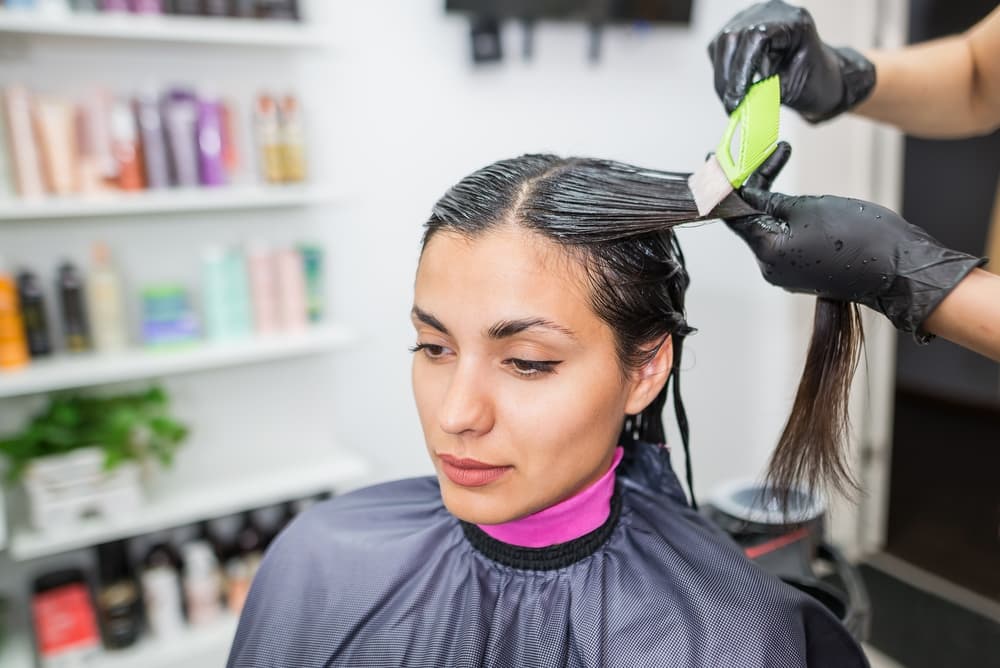
What a keratin treatment really does, who it suits, and how to decide, explained simply, backed by science.
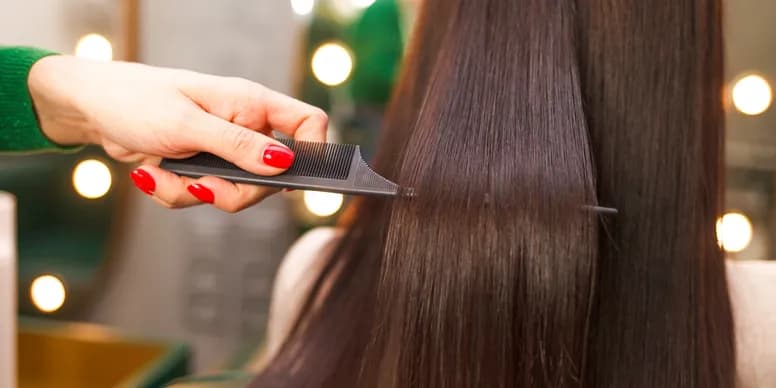
A friendly, honest guide to hair smoothening, what it is, how it differs from keratin and rebonding, and how we keep it safe.
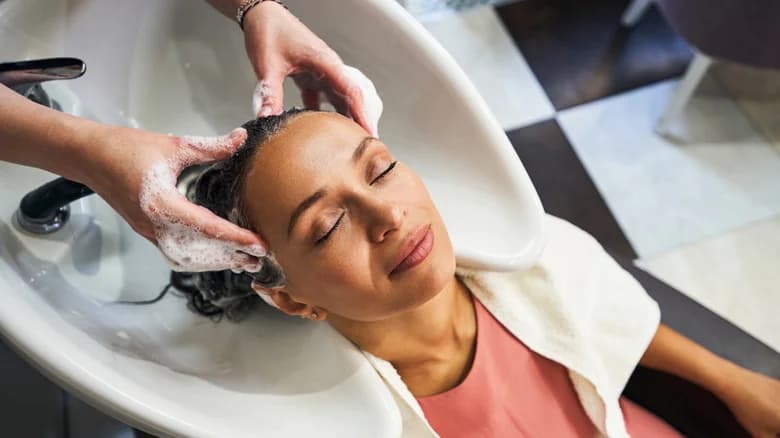
Your scalp is the soil your hair grows from. Here's what a salon scalp treatment can and can't, do, explained simply.
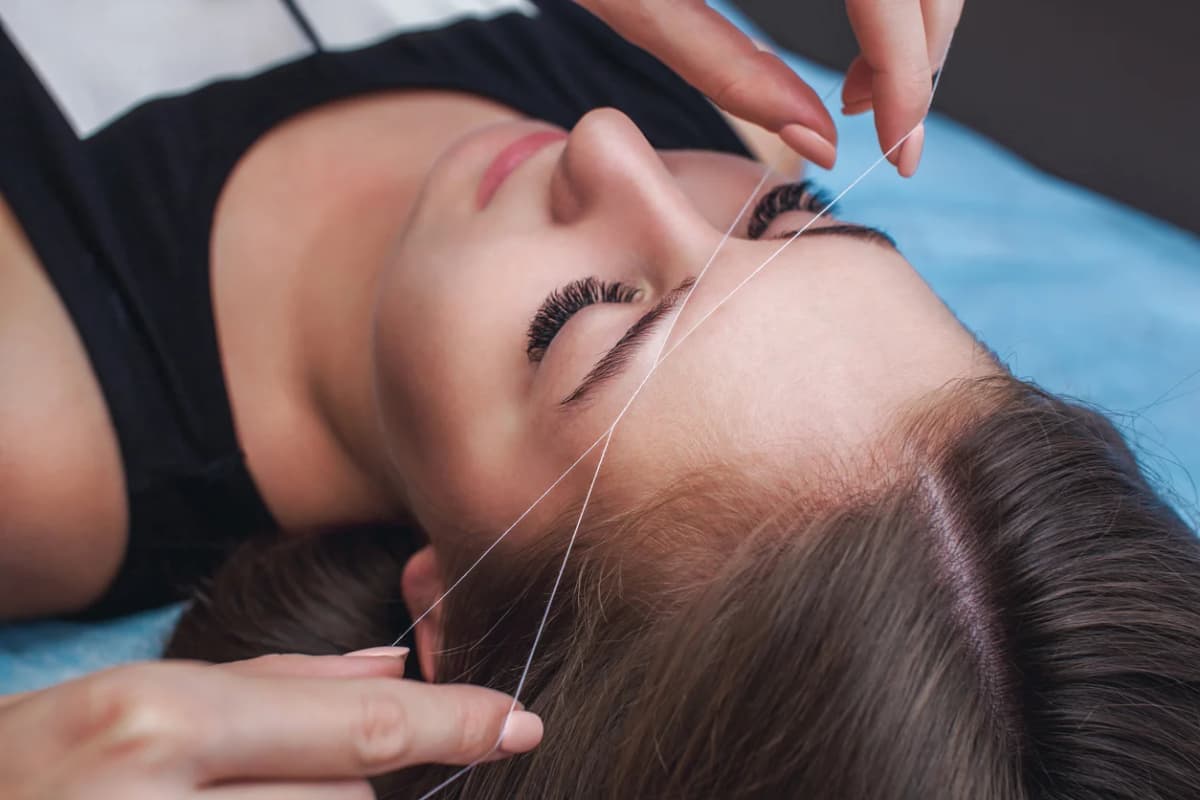
A friendly guide to the quick add-on treatments worth booking alongside your facial or hair appointment and how to get the best results.
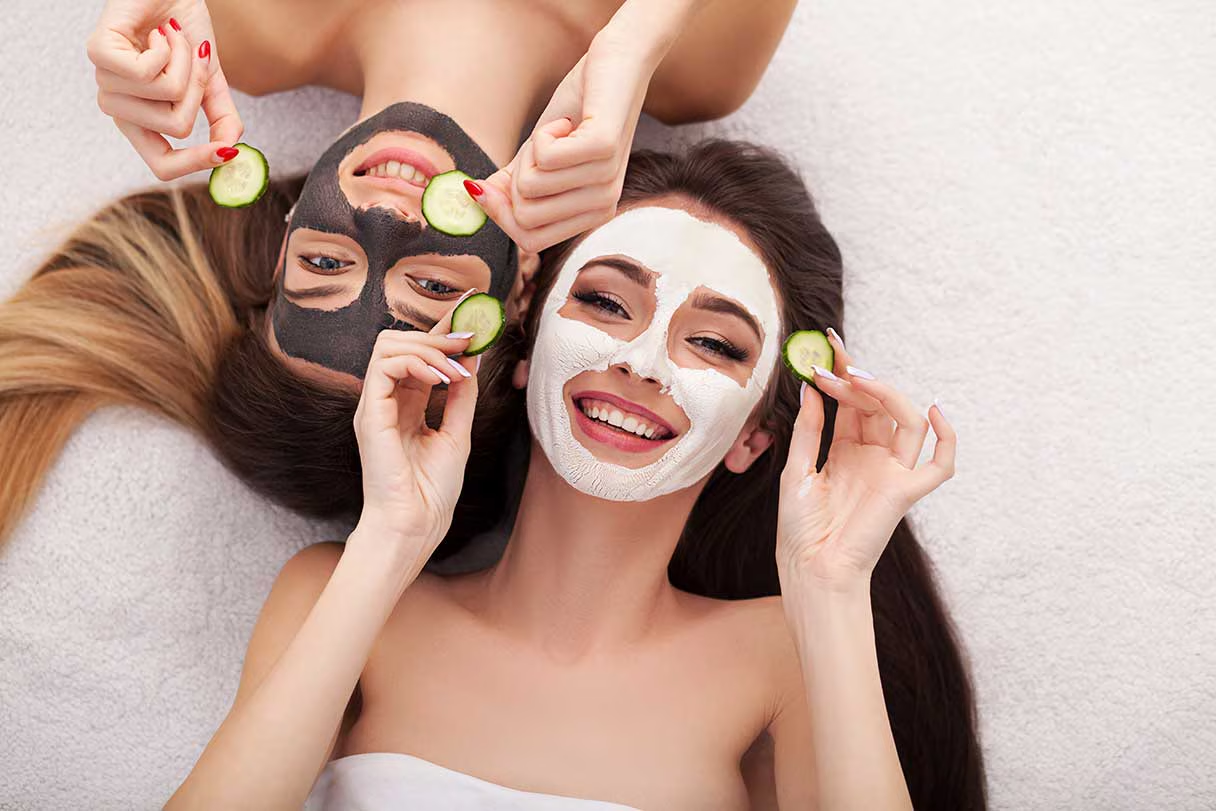
Your guide to professional facials and why your face deserves the very best care